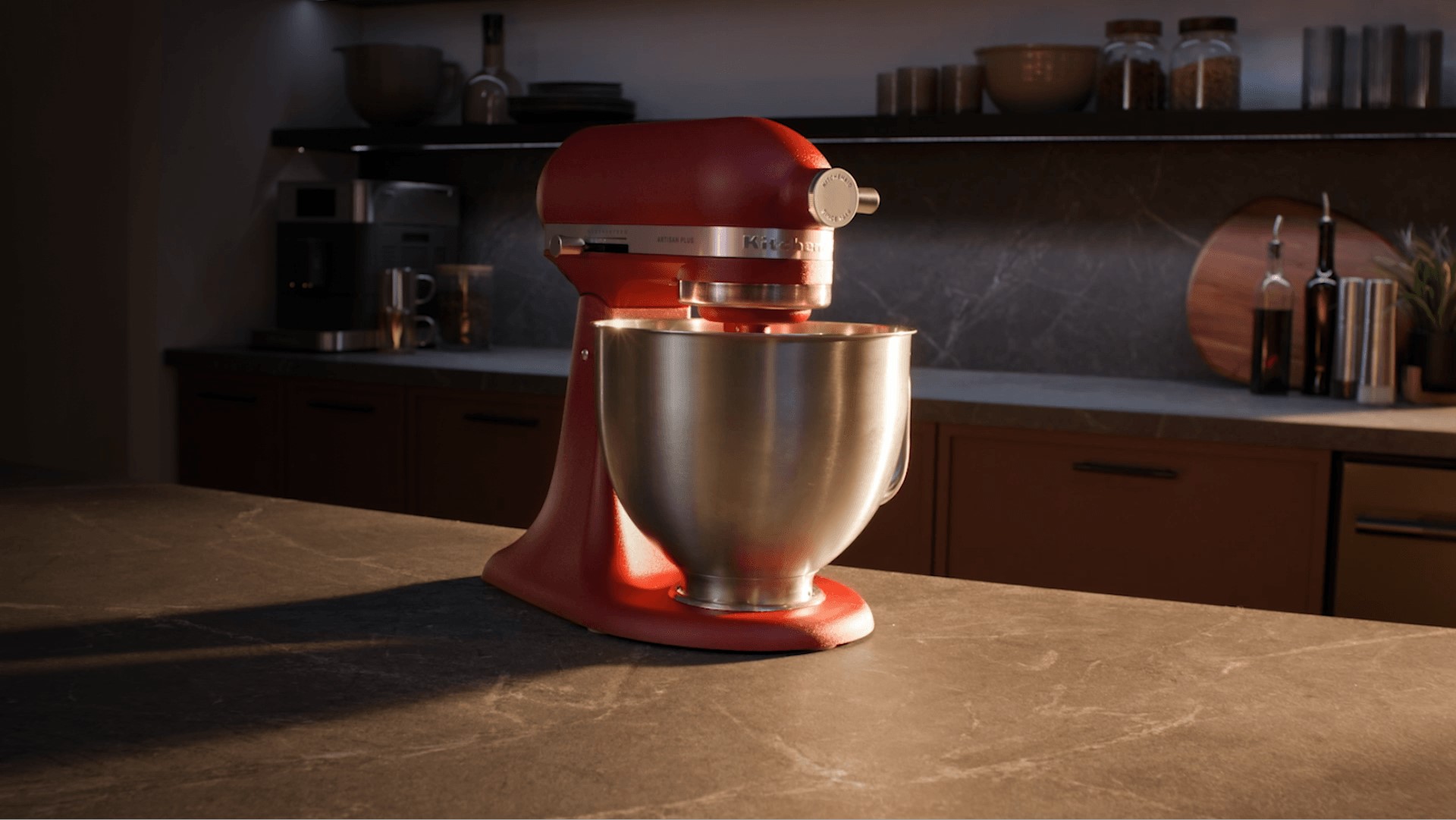
For home bakers who want a reliable stand mixer for everyday recipes, the KitchenAid Artisan Stand Mixer is one of the most recognizable options in the category. It is designed to handle common baking tasks such as mixing cake batter, whipping cream, kneading dough, and preparing cookie mixtures while also supporting a wide range of optional attachments.
This KitchenAid Artisan Stand Mixer review looks at its core features, day-to-day usability, strengths, limitations, and who it may suit best. If you are comparing stand mixers for home baking, this guide can help you decide whether the Artisan model fits your kitchen and baking habits.
KitchenAid Artisan Stand Mixer at a Glance
The KitchenAid Artisan series is aimed at home users who want a full-size stand mixer with a traditional bowl-lift-free design, multiple speed settings, and enough capacity for regular household baking.
The well-known 5-quart version is especially popular because it offers enough bowl space for many home recipes without being excessively large for a standard kitchen counter.
Typical uses include:
- Cake batter
- Cookie dough
- Bread dough
- Whipped cream
- Frosting
- Mashed potatoes
- Meringue
- Pizza dough
- General mixing tasks
For many buyers, the main appeal is the balance between versatility, build quality, and ease of use.
KitchenAid Artisan Mixer Design
One of the first things people notice about the Artisan mixer is its classic design.
The mixer uses a tilt-head format, which means the upper part of the machine tilts backward to provide access to the bowl and attachments. This makes it relatively simple to add ingredients, remove the bowl, or change mixing accessories.
The design is also compact enough for many home kitchens, although it is still a substantial appliance and should ideally have a permanent or semi-permanent place on the counter.
Another advantage is the wide range of available colors. This makes the mixer appealing to buyers who care about how kitchen appliances look as well as how they perform.
KitchenAid Artisan 5 Quart Review: Bowl Capacity
For many households, the 5-quart bowl is one of the strongest reasons to consider the Artisan series.
It provides enough room for common baking projects without moving into commercial-size territory.
A 5-quart bowl can be useful for:
- Multiple batches of cookies
- Standard cakes
- Cupcake batter
- Bread dough
- Frosting for layered cakes
- Whipped cream and meringue
This makes the mixer practical for people who bake regularly for a family, small gatherings, or special occasions.
However, users who frequently prepare very large batches may want to consider a larger-capacity mixer.
Artisan Stand Mixer Features
The main Artisan stand mixer features are focused on flexibility rather than automation.
Multiple speed settings
The mixer offers a range of speeds for different tasks.
Lower speeds are useful for combining dry and wet ingredients without creating too much mess, while higher speeds can be used for whipping or beating.
Having multiple speed options gives users more control over texture and consistency.
Tilt-head design
The tilt-head mechanism makes accessing the bowl straightforward.
This is especially convenient when scraping the bowl, adding ingredients, or switching between attachments during a recipe.
Mixing attachments
The Artisan typically supports the standard tools needed for common baking tasks, such as:
- Flat beater
- Dough hook
- Wire whip
These attachments cover most everyday mixing requirements.
Attachment hub
One of the more distinctive features of KitchenAid stand mixers is the front attachment hub.
Depending on compatibility, optional accessories can expand the mixer beyond baking into other food-preparation tasks.
This can increase the long-term usefulness of the machine for buyers who want one appliance to perform several kitchen functions.
KitchenAid Stand Mixer for Baking
For users focused on baking, the Artisan is designed to handle a wide variety of recipes.
Cakes
For cake batter, the mixer can combine ingredients evenly while reducing the amount of manual mixing required.
The ability to adjust speed is useful when moving from initial ingredient incorporation to more thorough mixing.
Cookies
Cookie dough can become dense, especially when adding ingredients such as chocolate chips, nuts, or oats.
A stand mixer can make these heavier mixtures easier to manage than hand mixing.
Bread dough
The dough hook allows the machine to assist with kneading.
This can be helpful for home bakers who prepare bread, pizza bases, or similar dough-based recipes.
However, anyone who mainly makes large or very stiff dough batches should compare motor performance and capacity across different stand mixer models before purchasing.
Frosting and whipped ingredients
The wire whip can be used for cream, egg whites, and lighter mixtures.
This is where a stand mixer can significantly reduce manual effort compared with using a hand whisk.
Is the KitchenAid Artisan Easy to Use?
For most home users, the controls are relatively straightforward.
There are no complex digital menus or large numbers of programmed functions. Instead, the mixer relies on traditional mechanical controls.
This simplicity may appeal to buyers who prefer appliances that are easy to understand and operate.
The basic process usually involves:
- Place the bowl in position.
- Attach the required mixing tool.
- Add ingredients.
- Lower the mixer head.
- Select the appropriate speed.
- Stop and scrape the bowl when necessary.
This makes the mixer accessible to beginners while still giving experienced bakers enough control for more involved recipes.
KitchenAid Mixer Home Baking Experience
For regular home baking, consistency is one of the biggest benefits of using a stand mixer.
Instead of manually mixing thick dough or whipping ingredients for several minutes, the machine can perform much of the repetitive work.
This is particularly useful for people who bake:
- Several times per week
- Multiple recipes in one session
- Bread or dough regularly
- Cakes for birthdays or events
- Large batches of cookies
That said, owning a stand mixer does not eliminate all manual work. Ingredients still need to be measured, bowls may need scraping, and the correct speed and attachment must still be selected.
Cleaning and Maintenance
Cleaning is an important consideration before buying any kitchen appliance.
The mixer body should generally be wiped clean after use, particularly around areas where flour or batter may collect.
Removable accessories and the bowl require regular washing.
Users should also clean around the attachment point and moving areas carefully to prevent food residue from accumulating.
Compared with smaller hand mixers, a stand mixer takes slightly more countertop and cleaning effort, but the trade-off is greater mixing capability.
Size and Counter Space
Before buying, check the available space in your kitchen.
The Artisan is not a small appliance.
Consider:
- Counter depth
- Height under cabinets
- Space needed to tilt the head
- Storage for attachments
- Bowl storage
- Nearby power outlet
If the mixer needs to be moved in and out of a cabinet frequently, its weight may become an important consideration.
For people who bake regularly, leaving it on the counter is often more convenient.
What Are the Main Advantages?
The KitchenAid Artisan offers several practical advantages for home bakers.
Versatile for everyday baking
It can handle many recipes with one machine, from light whipped mixtures to heavier doughs.
Large enough for typical households
The 5-quart capacity works well for common home baking needs.
Simple controls
The mechanical design is easy to learn.
Expandable
Optional attachments can increase the number of tasks the mixer can perform.
Suitable for beginners and experienced bakers
It is approachable for new users while still providing enough control for people who bake frequently.
Potential Drawbacks
No stand mixer is ideal for every buyer.
It takes up space
The Artisan requires more counter space than a hand mixer or compact appliance.
It can be heavy
Moving it regularly may be inconvenient.
It may be more machine than occasional bakers need
Someone who only bakes a few times per year may find a hand mixer more practical.
Large-batch users may need more capacity
Those who regularly prepare very large quantities should compare larger stand mixer options.
Extra attachments increase total cost
The attachment system adds flexibility, but optional accessories are usually separate purchases.
Who Is the KitchenAid Artisan Best For?
The Artisan may be particularly suitable for:
- Regular home bakers
- Beginners who want to move beyond a hand mixer
- Families that bake frequently
- People who make cakes, cookies, frosting, and bread
- Users who value a traditional stand mixer design
- Buyers interested in adding compatible attachments later
It may be less suitable for someone who has very limited counter space or only occasionally needs a mixer.
KitchenAid Artisan vs Hand Mixer
A hand mixer is smaller, cheaper, and easier to store.
However, it requires more hands-on involvement and may be less comfortable when mixing heavy doughs or large batches.
The Artisan provides a more stable mixing setup and allows users to work on other parts of a recipe while the machine is running.
For occasional cake batter, a hand mixer may be enough. For regular baking, a stand mixer becomes more convenient.
Is the KitchenAid Artisan Stand Mixer Worth Considering?
The KitchenAid Artisan remains a strong option for people who want a traditional stand mixer for regular home baking.
Its 5-quart capacity, straightforward controls, multiple mixing tools, and expandable attachment system make it useful across a wide range of recipes.
It is not necessarily the right choice for every household. Buyers with very small kitchens, very occasional baking needs, or unusually large batch requirements may prefer another type of mixer.
For the typical home baker, though, the Artisan offers a balanced combination of capacity, flexibility, and usability.
Final Verdict
This KitchenAid Artisan mixer review shows why the model continues to appeal to home bakers who want a versatile appliance for everyday kitchen use.
It works particularly well for people who regularly prepare cakes, cookies, dough, frosting, and other mixed recipes. The familiar tilt-head design, 5-quart bowl, and support for multiple attachments make it flexible enough for both beginners and more experienced users.
If your goal is to find a dependable KitchenAid stand mixer for baking that can grow with your cooking habits, the Artisan is worth comparing with other full-size stand mixers in your budget.
The best choice ultimately depends on your baking frequency, available counter space, batch size, and whether you will actually use the additional flexibility a full-size stand mixer provides.
This article may contain affiliate links. If you use one of these links, we may earn a commission at no additional cost to you. Product details, availability and merchant information can change, so verify current information with the merchant before purchasing.
Related Guides
Related guides will appear here as more editorial content is published.